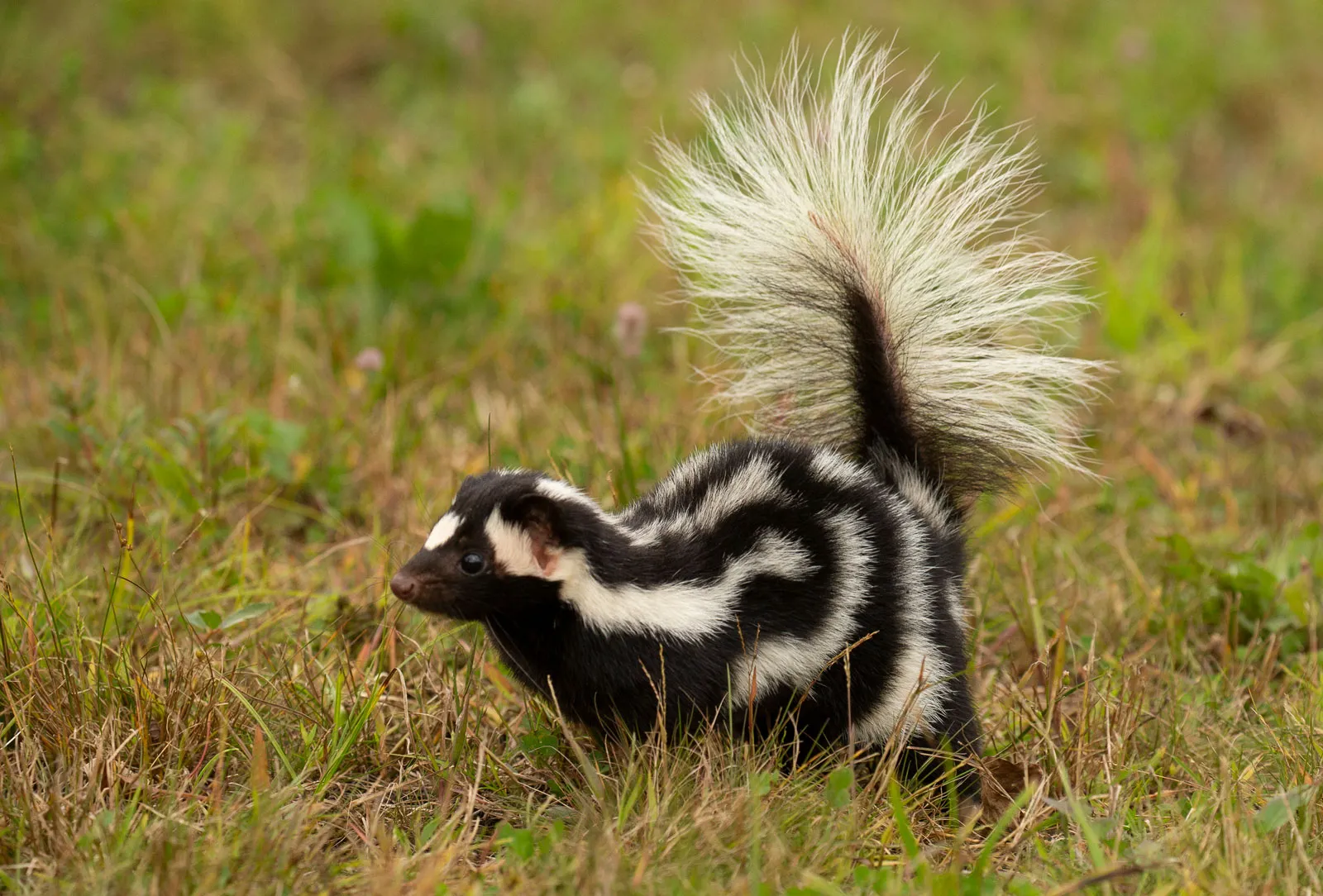
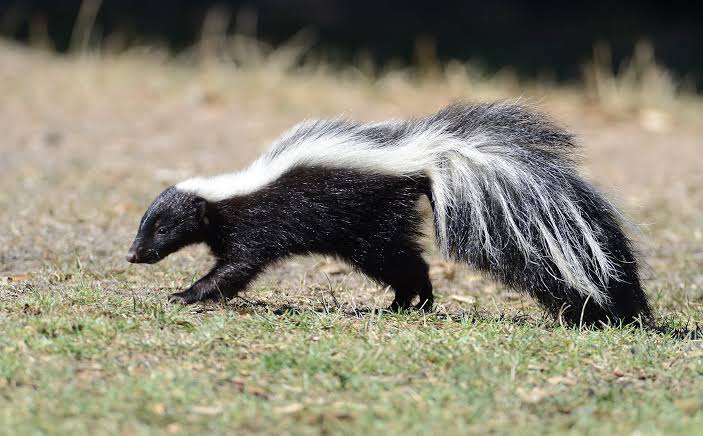
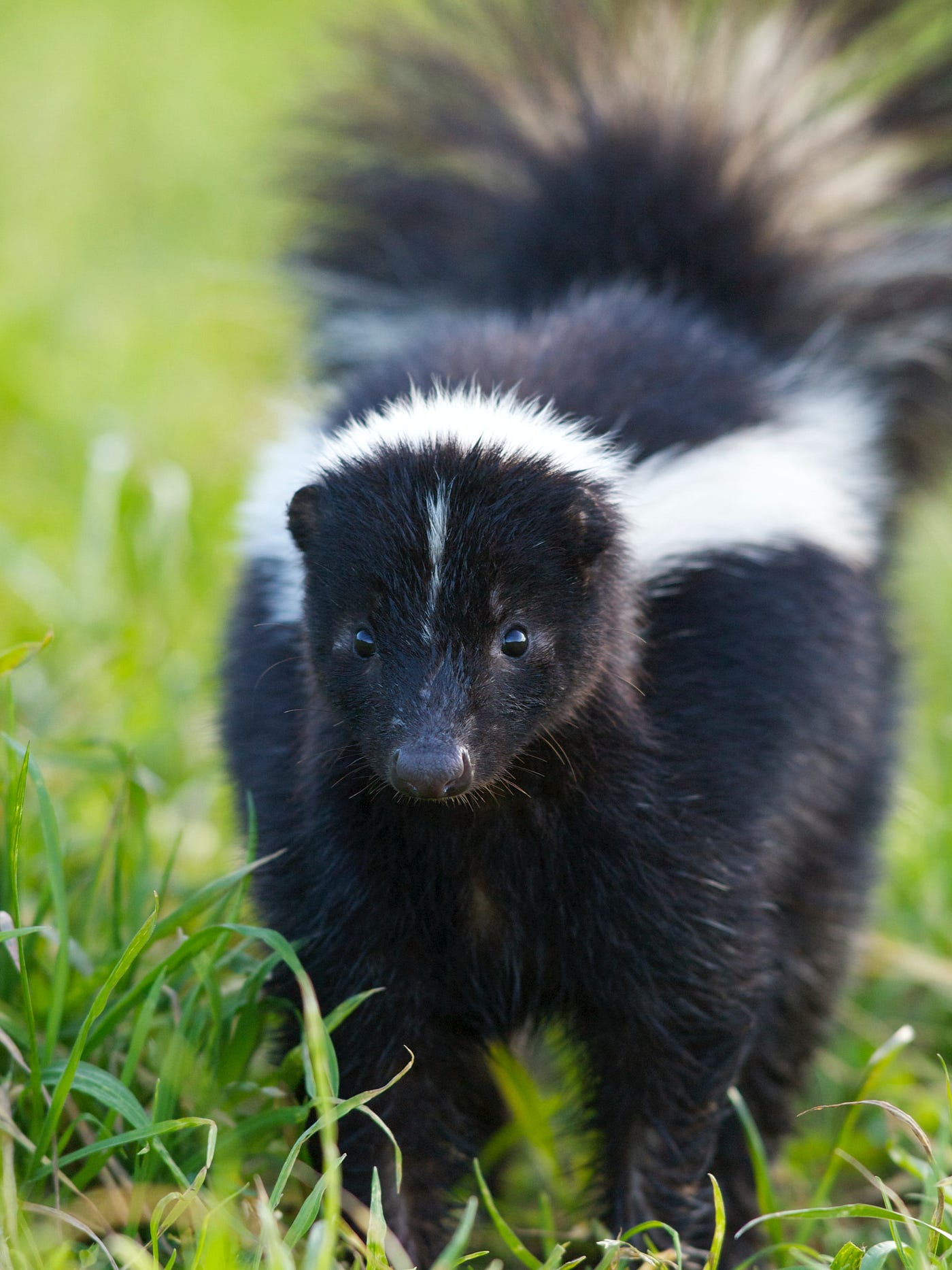
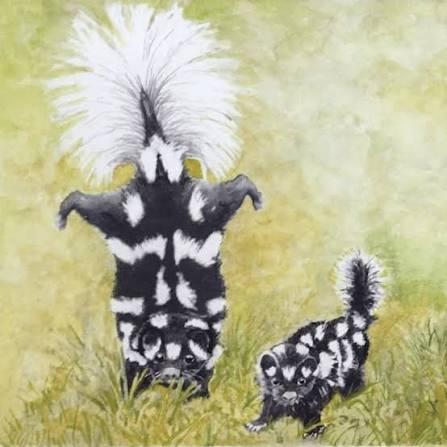
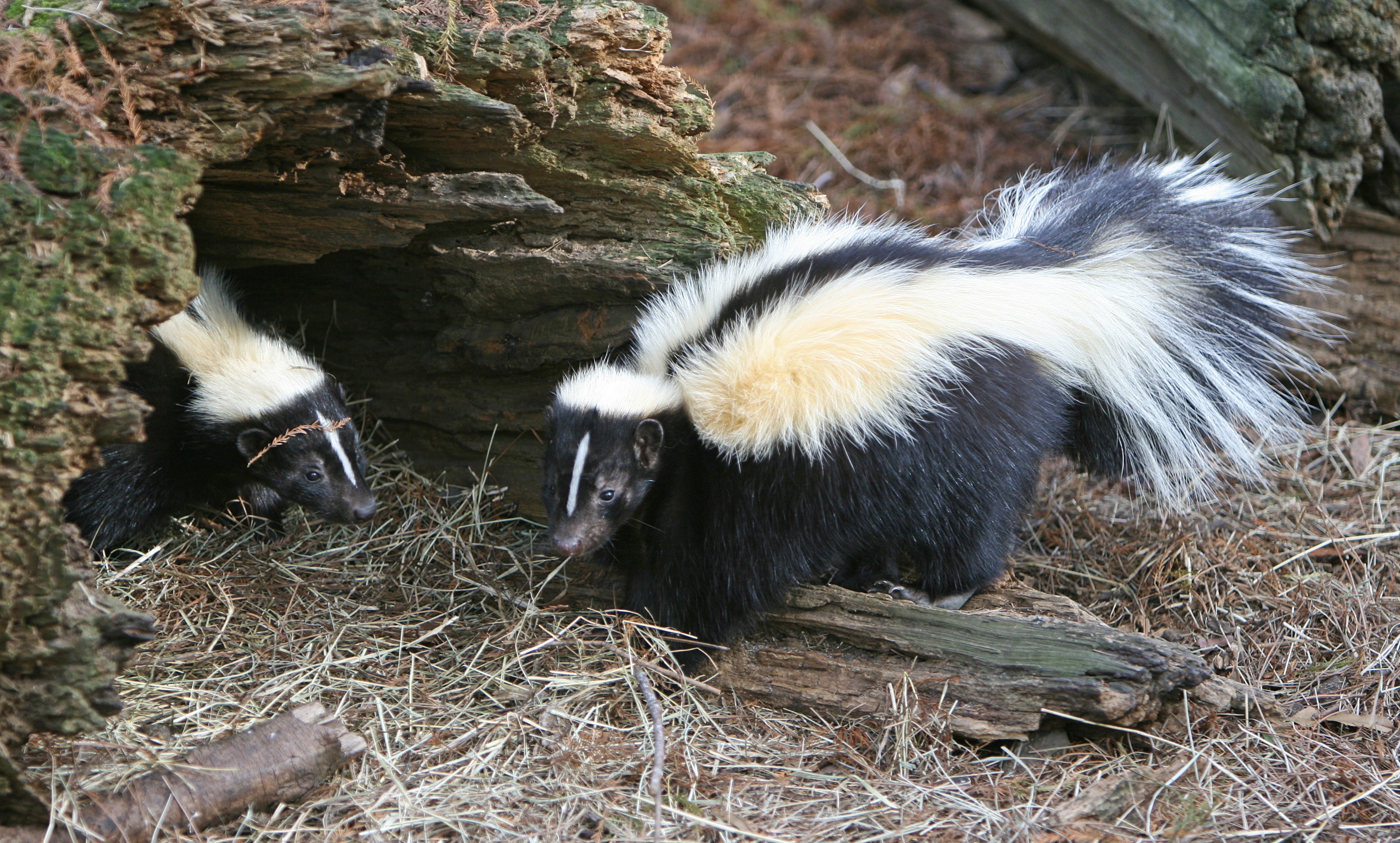
Skunks are small mammals best known for their black-and-white coloring and powerful defensive spray. Here’s a useful overview:
🦨 Basic Facts
Family: Mephitidae
Size: Usually about 15–30 inches long, including the tail.
Weight: Commonly 3–12 pounds, depending on species.
Lifespan: Around 2–3 years in the wild, though some live longer.
Diet: Omnivores—eat insects, grubs, worms, small rodents, eggs, fruits, berries, and other plant material.
Activity: Mostly nocturnal, meaning they are most active at night.
Habitat: Forests, grasslands, farmland, suburbs, and areas around homes where food and shelter are available.
💨 Why Do Skunks Spray?
A skunk's spray is a defensive weapon rather than an offensive one. When threatened, it may:
Stomp its feet or hiss.
Raise its tail.
Turn its rear toward the threat.
Spray a strong-smelling oily liquid from glands near its anus.
The spray can cause temporary eye irritation and difficulty seeing, and its smell can linger for days.
🏠 Skunks Around Homes
Skunks may enter residential areas looking for:
Garbage and food scraps
Pet food
Insects and grubs in lawns
Fallen fruit
Shelter underneath decks, sheds, porches, or crawl spaces
They generally prefer to avoid people and aren't naturally aggressive. Problems usually occur when a skunk feels cornered or threatened.
⚠️ Are Skunks Dangerous?
Generally, skunks aren't dangerous when left alone. However, they can carry rabies, so a skunk behaving unusually—such as approaching people during the daytime, appearing disoriented, staggering, or showing unexplained aggression—should be treated cautiously.
If you encounter one, don't approach, corner, or attempt to handle it.
🦨 Interesting Facts
Skunks can spray accurately from several feet away.
Their distinctive warning stripes make them recognizable to potential predators.
They have relatively poor eyesight but an excellent sense of smell.
Skunks are beneficial to ecosystems because they eat many insects and other pests.
They can dig surprisingly well with their strong front claws.
Most skunks are solitary animals, although mothers stay with their young.