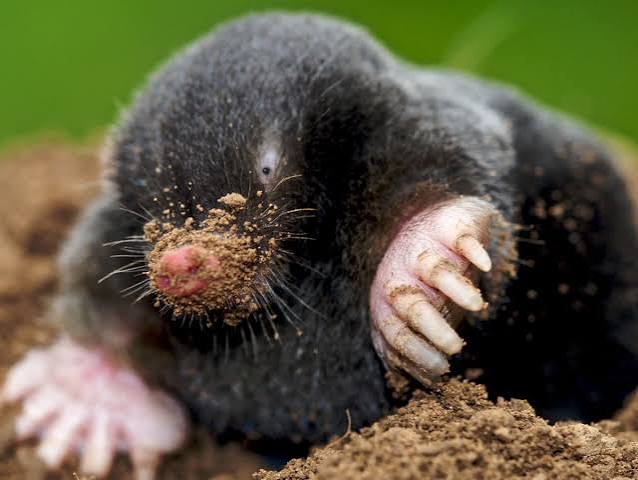
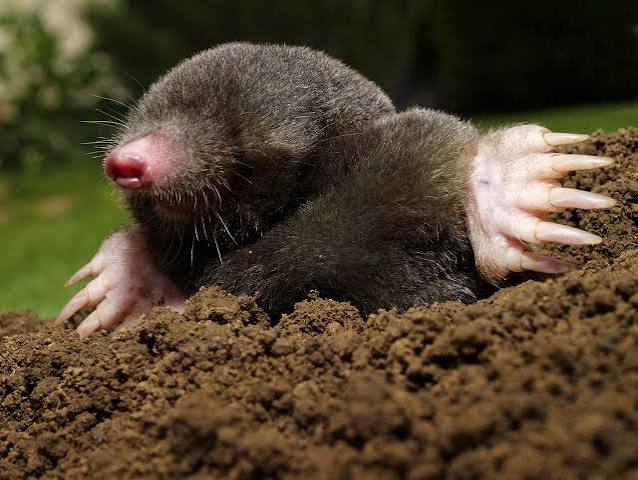
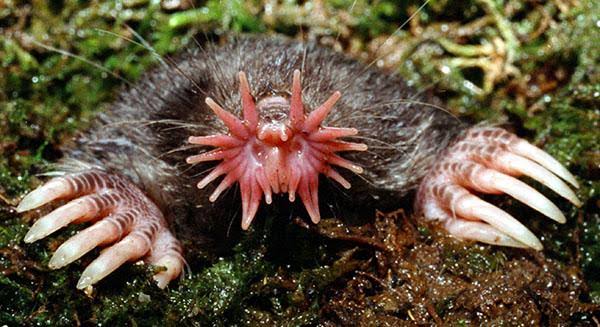
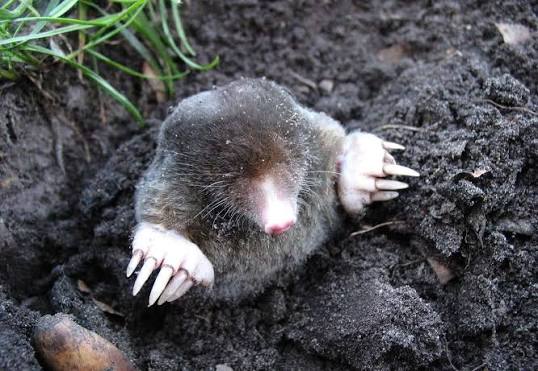
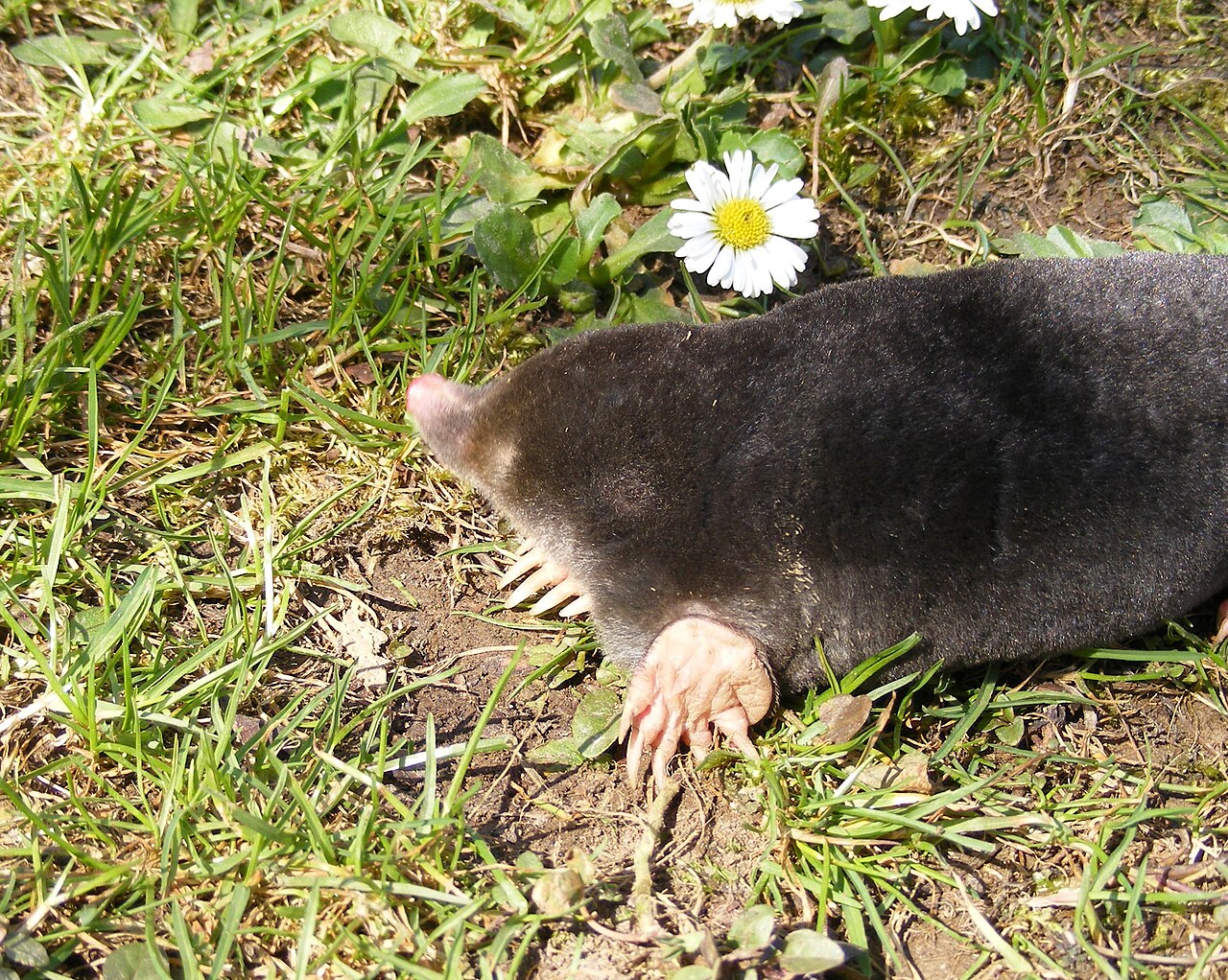
A mole is a small, burrowing mammal known for living mostly underground. Moles are specially adapted for digging through soil and are often found in gardens, lawns, forests, and fields.
Appearance
Small, compact body, usually about 4–8 inches long.
Covered in short, velvety fur that helps it move through narrow tunnels.
Very small eyes and ears, often difficult to see.
Pointed snout and a highly sensitive nose.
Large, powerful front feet with long claws designed for digging.
Short tail.
Diet
Moles are primarily insectivores, meaning they mainly eat animals rather than plants. Their diet can include:
Earthworms
Grubs
Insects and insect larvae
Spiders
Other small soil-dwelling invertebrates
Despite common belief, moles generally do not eat plant roots. However, their tunneling can disturb or damage plants.
Habitat
Moles spend most of their lives underground. They create:
Shallow tunnels used for searching for food.
Deep tunnels used for nesting and shelter.
Underground chambers where they rest and raise young.
Behavior
Moles are generally solitary animals and spend much of their time underground. They have poor eyesight but an excellent sense of smell and touch, which helps them locate prey in darkness.
Signs of Moles
Common signs include:
Raised ridges or tunnels across lawns.
Small mounds of loose soil called molehills.
Soil disturbance around gardens and flower beds.
Wilting or disturbed plants when tunnels affect their roots.
Reproduction
Moles typically breed once a year. Females usually give birth to a small litter of young, which remain in the nest until they are developed enough to live independently.
Interesting Facts
Moles are not rodents; they belong to the mammal order Eulipotyphla.
Their broad front feet work almost like shovels.
They can dig surprisingly quickly through suitable soil.
Moles spend much of their lives underground and are rarely seen above ground.
A mole's velvety fur can lie in either direction, allowing it to move backward and forward through